
How to document fire damage for insurance? This question becomes crucial when disaster strikes and you need to ensure that your insurance claim is processed smoothly. At LMR Public Adjusters, we understand the importance of thorough documentation in maximizing your insurance claims. As South Florida’s premier public adjusters, we are dedicated to advocating for property owners and helping them navigate the complex claims process. Have you ever wondered how to effectively document fire damage to ensure you receive the compensation you deserve?
Documenting fire damage involves several key steps, including taking detailed photographs, compiling a comprehensive inventory of damaged items, and obtaining professional assessments. These steps are essential to substantiate your claim and demonstrate the extent of the damage to your insurance company. In this article, we will guide you through the process of documenting fire damage, ensuring that you are well-prepared to file your insurance claim and secure the maximum compensation possible.
But there’s more to learn about effectively documenting fire damage for insurance purposes. With insights from industry experts and practical tips, you’ll be equipped to handle this daunting task with confidence. So, let’s delve deeper into the essential steps and expert advice that will help you navigate the insurance claims process successfully. Ready to ensure your claim is as strong as possible? Let’s get started!
Fire damage encompasses various forms, each with distinct consequences. Structural damage often results from intense heat, compromising the integrity of walls and roofs. Smoke damage, on the other hand, permeates surfaces, leaving behind stubborn odors and stains. Additionally, water damage from firefighting efforts can exacerbate the situation, leading to potential mold growth. The immediate impact on property is visible and devastating. Personal belongings may be charred or rendered unusable. Long-term effects include ongoing repairs and potential health risks from lingering smoke and mold.
For homeowners, the emotional toll is significant. The loss of cherished items and the disruption of daily life can be overwhelming. Financially, the burden of repairs and replacements can be daunting. Understanding these impacts is crucial for effective recovery. For more information on how to handle such situations, visit our property claims page. Additionally, our about us section provides insights into our expertise in managing fire damage claims. Homeowners can also explore our blog page for further guidance and support.
Thorough documentation of fire damage is essential for successful insurance claims. It provides a clear record of the extent of the damage, which is crucial for property claims. Without detailed evidence, insurers may dispute the claim, leading to delays or reduced compensation. Proper documentation, including photos and detailed descriptions, can expedite the claims process. It ensures that you receive fair compensation for your losses. Moreover, it helps adjusters assess the situation accurately, reducing the likelihood of disputes.
However, documenting fire damage presents challenges. The aftermath of a fire can be overwhelming, making it difficult to capture all necessary details. To overcome this, create a checklist of items to document, such as structural damage and personal belongings. Additionally, consider hiring a professional, like a Pompano Beach public adjuster, to assist with the process. They have the expertise to ensure nothing is overlooked. By addressing these challenges, you can streamline your claim and secure the compensation you deserve. For more insights, visit our blog page.
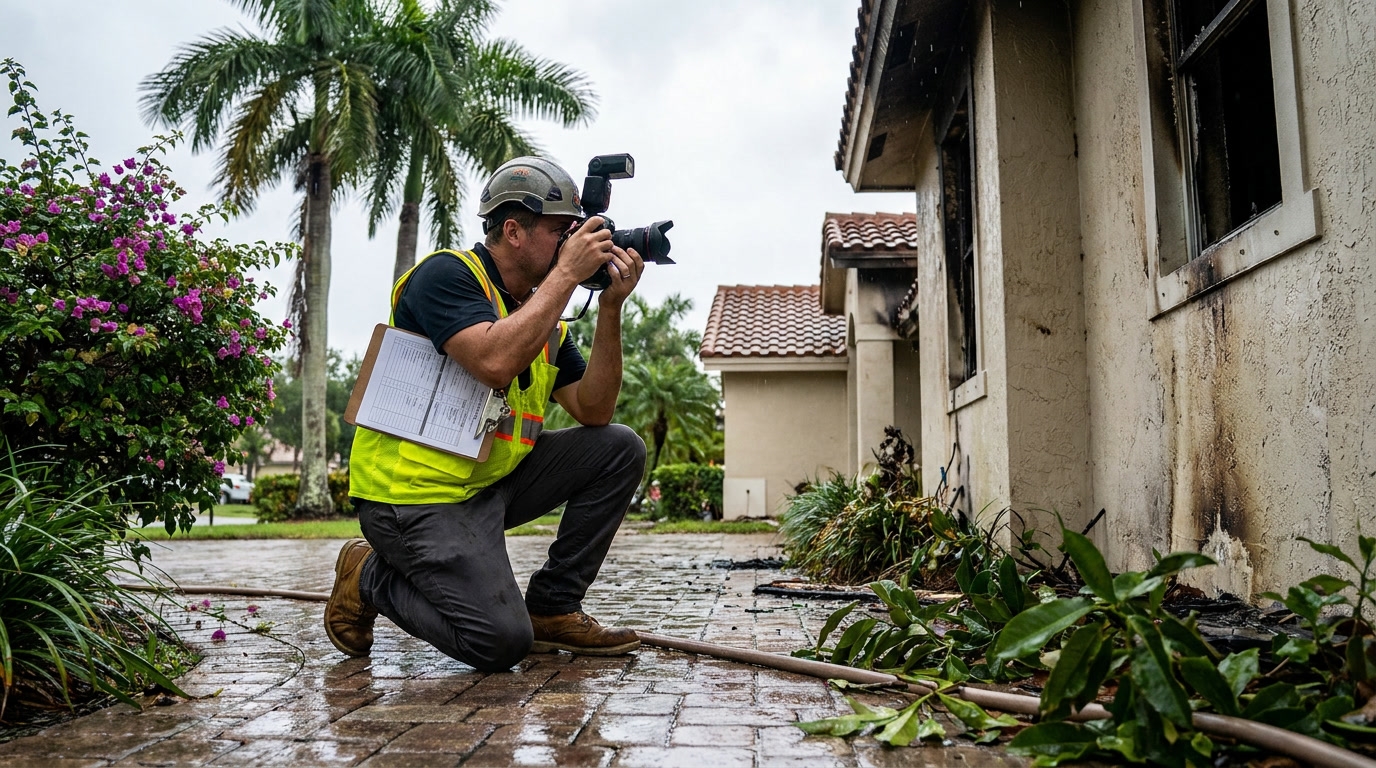
Before documenting fire damage, gather essential items like a camera, notebook, and smartphone. These tools help capture detailed evidence. Prioritize personal safety by ensuring the property is secure. Check for structural hazards and wear protective gear. This step is crucial before starting any documentation process. Immediately after a fire, take steps to preserve evidence. Avoid disturbing the scene unnecessarily. Document everything as soon as possible to prevent further damage. Capture wide-angle shots and close-ups of affected areas. This comprehensive approach aids in a thorough insurance claim. For more guidance on handling property claims, visit our property claims page. If you’re in the area, our Fort Lauderdale public adjusters can provide local assistance. Additionally, consider reading our blog page for more tips on managing fire damage effectively.
Begin by capturing comprehensive photographs and videos of the fire damage. Use natural light whenever possible to ensure clarity. Take wide shots to cover entire rooms and close-ups for specific damage. Vary your angles to provide a complete view. This visual evidence is crucial for your insurance claim.
Next, create a detailed inventory of all damaged items. Include descriptions, purchase dates, and estimated values. This list will help substantiate your claim. Be thorough and precise, as this documentation is vital for assessing the extent of your loss.
Additionally, record the condition of structural elements. Look for visible signs of damage, such as charred walls or warped floors. Document these meticulously, as they are essential for evaluating repair needs. For more guidance on handling such situations, visit our property claims page.
Finally, remember that thorough documentation can significantly impact your claim’s success. For further assistance, explore our FAQ section or learn more about our services on our about us page.
When documenting fire damage for insurance claims, gather essential supporting documents. Start with receipts for any repairs or replacements. Include warranties for appliances or systems affected by the fire. Previous appraisals of your property can also provide valuable context. Organize these documents systematically. Use labeled folders or binders to categorize them by type, such as receipts, warranties, and appraisals. This organization ensures quick access during the claims process. Additionally, create digital backups of all documentation. Scan each document and store them securely in cloud storage. This step adds an extra layer of security and ensures you have access even if physical copies are lost. For more guidance on handling property claims, visit our property claims page. If you’re dealing with specific issues like wind damage, our resources can help. Remember, thorough documentation and organization can significantly streamline your insurance claims process.
When contacting your insurance company to report fire damage, start by gathering all necessary details. Call your insurer promptly and provide your policy number, the date of the incident, and a brief description of the fire. Clearly outline the extent of the damage, emphasizing any structural issues or lost belongings. Use photos and videos to support your claims, as visual evidence can be compelling.
During initial communications, remain calm and concise. Highlight key points and avoid unnecessary details. This approach ensures that your insurer understands the severity of the situation. Additionally, inquire about the next steps and any specific documentation they require.
An insurance adjuster will likely visit your property to assess the damage. Prepare for their visit by organizing all relevant documents and evidence. This includes repair estimates and a detailed inventory of damaged items. Understanding the adjuster’s role can streamline the process and help you secure a fair settlement. For more insights, visit our blog page or learn about our services in your area.
The insurance claims process typically begins with notifying your insurer about the fire damage. This step is crucial and should be done promptly. After filing the claim, an adjuster will assess the damage. This evaluation can take several days to weeks, depending on the severity. Once the assessment is complete, the insurer will offer a settlement. If you disagree with the offer, you can negotiate. It’s essential to document all communications and keep records of every interaction. In case of disputes, consider consulting a public adjuster for expert advice. They can help you navigate disagreements and ensure a fair settlement. Throughout the process, maintain clear and consistent communication with your insurer. Regular updates can prevent misunderstandings. Utilize email for written records and follow up on phone calls with a summary email. For more guidance, visit our blog page or check our FAQ section for additional tips.
What should I do if my fire damage documentation is incomplete?
If your documentation is incomplete, start by gathering any available evidence. Take photos of the damage and collect receipts for repairs. Contact your insurance company to explain the situation. They may offer guidance on how to proceed. For more detailed assistance, consider consulting with a public adjuster.
How can I handle disputes with my insurance company?
Disputes can arise during the claims process. First, review your policy to understand your coverage. Communicate clearly with your insurer and provide all necessary documentation. If disagreements persist, you might need to hire a professional, such as a public adjuster, to negotiate on your behalf.
What should I expect from the claims process?
The claims process involves several steps. Initially, you will file a claim and provide documentation. An adjuster will assess the damage. Then, the insurance company will offer a settlement. Be prepared for possible negotiations. For more insights, visit our FAQ page.
To safeguard your property from future fire damage, start by installing smoke detectors in every room. Regularly test these devices to ensure they function correctly. Additionally, create a comprehensive fire escape plan for your household. Practice this plan frequently to ensure everyone knows the safest exit routes. Regular maintenance and inspections are crucial in reducing fire risks. Check electrical systems and appliances for any faults or wear and tear. Clean chimneys and vents to prevent blockages that could lead to fires. For more detailed guidance, explore resources on fire safety and prevention. Consider visiting our blog page for expert advice. If you need assistance with property claims, our property claims section offers valuable insights. For those in specific areas, our Fort Lauderdale public adjusters are ready to help. Stay informed and proactive to protect your home and loved ones from potential fire hazards.
In conclusion, documenting fire damage meticulously is crucial for a successful insurance claim. Throughout this article, we discussed the importance of capturing detailed photographs, maintaining accurate records, and promptly reporting the incident. These steps ensure that your claim process is smooth and efficient. Moreover, thorough documentation can significantly impact the outcome of your claim, potentially leading to a more favorable settlement. It is essential to stay informed and prepared for any fire incidents that may occur. By doing so, you safeguard your property and financial interests. For more insights on handling property claims, visit our blog page. Additionally, understanding the nuances of commercial properties and their specific needs can be beneficial. Remember, being proactive and knowledgeable can make a substantial difference. For further assistance, learn more about us and how we can support you in these challenging times.
Dania Beach, Broward County, Davie, Weston, Boca Raton, Cooper City, Coral Springs, Deerfield Beach, Fort Lauderdale, Hollywood, Parkland, Pembroke Pines, Pinecrest, Plantation, Pompano Beach, Sunrise, Fisher Island, Miramar, Delray Beach, Hallandale Beach , Lake Worth, Boynton