

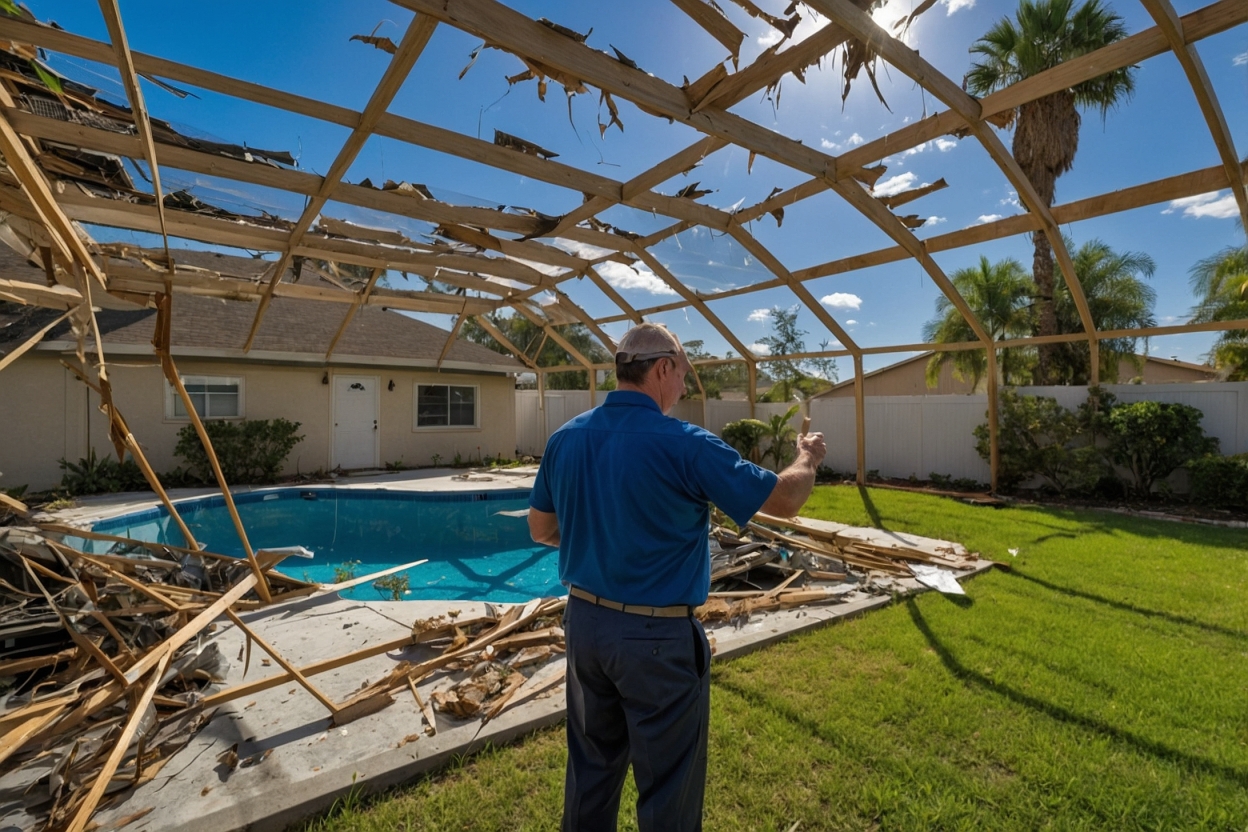
Dealing with wind damage to your pool screen can be a frustrating and costly experience, especially in storm-prone areas like South Florida. Whether you’re in Miami, Fort Lauderdale, West Palm Beach, or Tampa, strong winds from hurricanes or tropical storms can easily tear or collapse your pool enclosure, leaving your property exposed and vulnerable. Filing a claim for wind damage to pool screens may seem straightforward, but navigating the insurance process can be complex and overwhelming without professional help. That’s where LMR Public Adjusters comes in.
As a trusted leader in public adjusting services across Florida, LMR Public Adjusters specializes in helping homeowners and businesses file insurance claims for wind damage and other types of property damage. Our experienced team understands the intricacies of insurance policies and works diligently to ensure you receive the maximum compensation you’re entitled to. From initial damage assessment to negotiating with your insurance company, we handle every step of the claims process so you don’t have to.
If your pool screen has suffered storm damage, don’t wait—contact LMR Public Adjusters for a free claim assessment. With our no recovery, no fee policy and 24/7 customer support, we’re committed to making the insurance claim process as smooth and stress-free as possible. Let us help you restore your property and peace of mind.
Wind damage is a common yet often underestimated threat to pool screens, especially in regions prone to hurricanes and strong storms. These enclosures, typically made of aluminum frames and mesh screening, are designed to provide protection from insects and debris while allowing for ventilation and sunlight. However, their lightweight construction makes them particularly vulnerable to high winds. Understanding how wind damage occurs and the extent of its impact on pool screens is crucial for homeowners looking to protect their property and file accurate insurance claims.
When strong winds hit, the pressure exerted on pool screens can cause a variety of structural issues. The most common forms of damage include torn or detached screens, bent or broken aluminum frames, and in severe cases, complete collapse of the enclosure. According to the Federal Emergency Management Agency (FEMA), wind speeds as low as 50 mph can begin to cause structural damage to poorly maintained or older pool enclosures. In hurricane-prone areas like Florida, where wind speeds can exceed 100 mph, the risk is significantly higher.
The design and installation quality of a pool screen enclosure play a significant role in its ability to withstand wind forces. Enclosures that are not properly anchored or that use substandard materials are more likely to fail during a storm. Additionally, debris carried by the wind can puncture or tear the mesh, further compromising the structure. Over time, exposure to UV rays and moisture can weaken the materials, making them more susceptible to damage even during moderate wind events.
One of the most overlooked aspects of wind damage is the secondary effects it can have on other parts of the property. For instance, a collapsed pool screen can damage nearby windows, roofs, or landscaping. It can also pose safety hazards to residents and pets. Moreover, once the enclosure is compromised, the pool area becomes exposed to debris, pests, and even wildlife, leading to additional maintenance and repair costs.
Insurance companies often scrutinize claims related to wind damage, especially when it involves structures like pool screens that may not be considered essential. Therefore, it is important to document the damage thoroughly and understand the specific terms of your homeowner’s insurance policy. Some policies may cover wind damage under general property damage, while others may require separate windstorm coverage. According to the Insurance Information Institute, wind and hail damage accounted for nearly 34 percent of all homeowners insurance claims in recent years, highlighting the importance of proper documentation and timely filing.
To better understand the impact of wind damage on pool screens, consider the following real-world examples:
These examples underscore the importance of proactive maintenance and professional assessment following a wind event. Homeowners are encouraged to inspect their pool screens regularly for signs of wear and tear, such as rusted joints, loose fasteners, or sagging mesh. Reinforcing the structure with hurricane-rated materials and ensuring proper anchoring can significantly reduce the risk of damage.
For those who have already experienced wind damage, seeking professional assistance can streamline the claims process. A licensed public adjuster can help evaluate the extent of the damage, estimate repair costs, and negotiate with insurance companies on your behalf. Learn more about how our team can assist you by visiting our about us page.
It’s also beneficial to familiarize yourself with frequently asked questions related to property claims. Our comprehensive FAQ section provides valuable insights into what to expect during the claims process and how to prepare the necessary documentation.
In conclusion, wind damage to pool screens is a serious concern that can lead to extensive property damage and financial loss if not addressed promptly. By understanding the mechanics of wind damage, maintaining your enclosure, and seeking professional guidance when needed, you can protect your investment and ensure a smoother insurance claims process. For more information on how to handle wind-related property damage, visit reputable sources such as the National Weather Service (https://www.weather.gov/) and the Insurance Information Institute (https://www.iii.org/).
"The best defense against wind damage is preparation. Regular maintenance and understanding your insurance policy can make all the difference when a storm hits."
By staying informed and proactive, homeowners can minimize the impact of wind damage and ensure their pool screens remain a safe and functional part of their outdoor living space.
Filing a claim for wind damage to your pool screens can be a daunting process, especially if you’ve never navigated the insurance system before. However, understanding the correct steps to take can make the process smoother and increase your chances of a successful claim. The first step is to assess the damage as soon as it is safe to do so. After a windstorm, inspect your pool enclosure thoroughly. Look for torn screens, bent frames, or any structural damage. Take clear, high-resolution photos and videos from multiple angles to document the extent of the damage. This visual evidence will be crucial when presenting your case to the insurance company.
Next, review your homeowner’s insurance policy to determine if wind damage is covered and to what extent. Most standard policies do include wind damage, but coverage can vary depending on your location and the specifics of your plan. Pay close attention to the deductible and any exclusions that may apply. If you’re unsure about the terms, consider reaching out to a professional for clarification. You can also visit our FAQ page for answers to common questions about insurance claims and coverage.
Once you’ve reviewed your policy, contact your insurance company to report the damage. It’s important to notify them as soon as possible, as delays can affect your claim’s validity. When speaking with your insurer, provide them with all the documentation you’ve gathered, including photos, videos, and a written description of the damage. Be honest and detailed in your report. The insurance company will likely assign an adjuster to inspect the damage in person. During this inspection, it’s beneficial to have a public adjuster present to ensure that all damage is properly documented and that nothing is overlooked.
Hiring a public adjuster can significantly improve the outcome of your claim. These professionals work on your behalf, not the insurance company’s, and they are skilled in negotiating fair settlements. At LMR Public Adjusters, we specialize in helping homeowners with property damage claims, including those related to wind damage. Learn more about our services by visiting our About Us page. Our team has extensive experience in handling claims for pool screen damage and can guide you through every step of the process.
After the inspection, the insurance company will provide a settlement offer based on their assessment. Review this offer carefully. If it does not cover the full extent of the damage or the cost of repairs, you have the right to dispute it. This is another area where a public adjuster can be invaluable. They can help you gather additional evidence, obtain repair estimates, and negotiate with the insurance company to reach a fair resolution.
While waiting for your claim to be processed, it’s important to mitigate further damage. This means taking temporary measures to protect your property, such as covering broken screens or securing loose structures. Keep all receipts for any materials or services you use during this time, as these may be reimbursable under your policy.
Once your claim is approved and you receive your settlement, you can proceed with the necessary repairs. Be sure to hire licensed and insured contractors who have experience with pool screen enclosures. Keep detailed records of all work performed, including invoices and before-and-after photos, in case you need to provide additional documentation later.
Throughout the entire process, communication is key. Keep a log of all interactions with your insurance company, contractors, and adjusters. This can be helpful if any disputes arise or if you need to reference specific conversations at a later date. For more insights and tips on handling property damage claims, check out our informative blog.
In summary, filing a wind damage insurance claim for your pool screens involves several critical steps: assessing and documenting the damage, reviewing your policy, notifying your insurer, working with a public adjuster, and managing repairs. By staying organized and proactive, you can ensure a smoother claims process and a more favorable outcome. If you need professional assistance, LMR Public Adjusters is here to help you every step of the way.
In conclusion, filing a claim for wind damage to your pool screens doesn’t have to be a stressful process. By understanding your insurance policy, documenting the damage thoroughly, and acting promptly, you can ensure a smoother claims experience. Don’t hesitate to consult with your insurance provider or a professional if you’re unsure about any part of the process. Taking these proactive steps will help you restore your pool enclosure quickly and protect your property from further damage in the future.
Dania Beach, Broward County, Davie, Weston, Boca Raton, Cooper City, Coral Springs, Deerfield Beach, Fort Lauderdale, Hollywood, Parkland, Pembroke Pines, Pinecrest, Plantation, Pompano Beach, Sunrise, Fisher Island, Miramar, Delray Beach, Hallandale Beach , Lake Worth, Boynton