

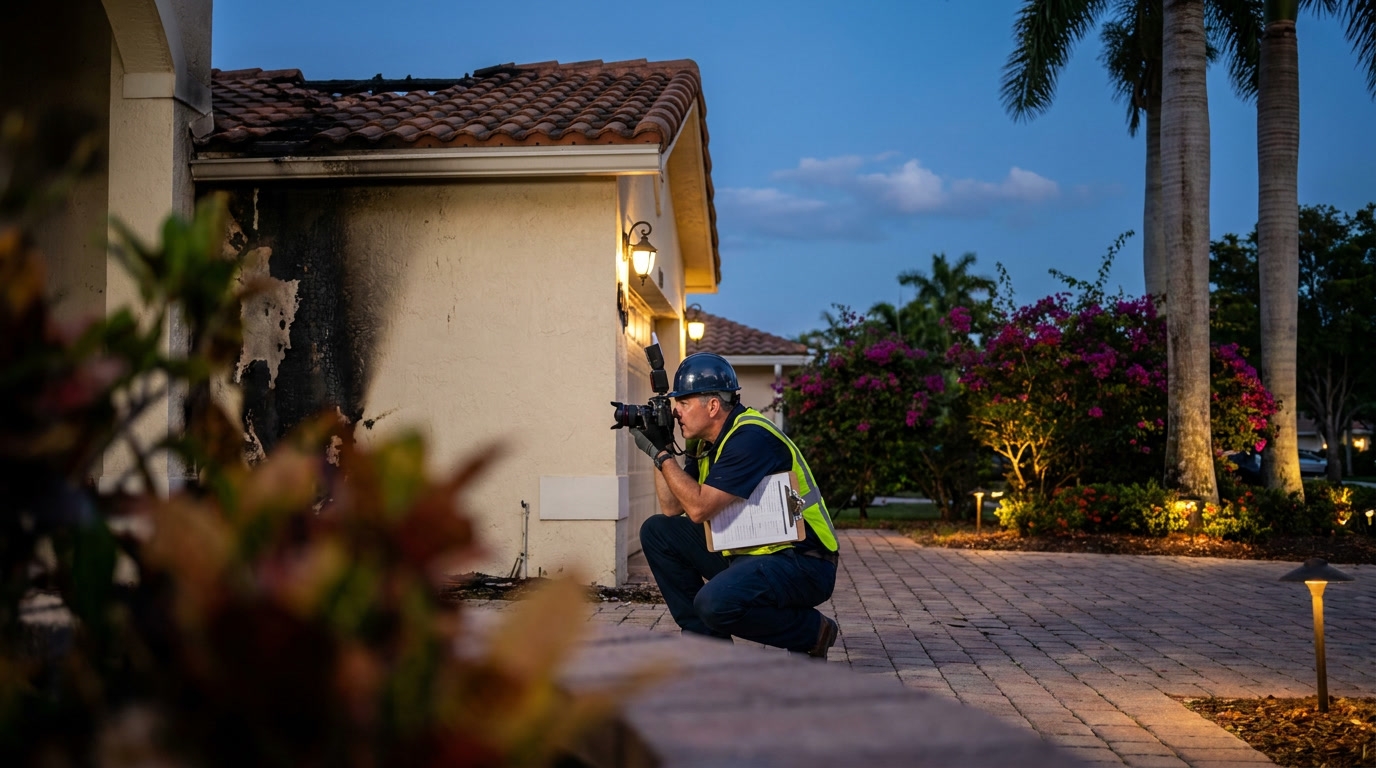
Experiencing a fire in your home or business can be devastating. The aftermath is not just about dealing with the emotional and physical loss, but also navigating the complex world of insurance claims. Proper documentation of fire damage is crucial to ensure you receive the compensation you deserve. In this guide, we’ll walk you through the steps to effectively document fire damage for insurance purposes.
When it comes to insurance claims, documentation is everything. Without it, you might find yourself in a tough spot trying to prove the extent of your loss. But why is documentation so crucial?
Insurance companies rely heavily on documentation to assess the validity and extent of a claim. It’s your evidence, your proof of loss. Without it, your claim might be undervalued or even denied. This is where LMR Public Adjusters, South Florida’s premier public adjusters, come into play. They advocate for property owners, ensuring you maximize your insurance claims with a personalized, dedicated team.
Document everything. From the initial damage to the ongoing repairs, every detail matters. Start with photographs and videos of the damage. Capture every angle, every room, and every item affected. Don’t forget to document structural damage, personal belongings, and any temporary repairs you make to prevent further damage.
Keep a detailed inventory of damaged items, including their value and purchase date. This will be invaluable when filing your claim. For more tips on documenting property claims, check out our property claims guide.
Now that you understand the importance of documentation, let’s dive into the steps you should take to document fire damage effectively.
As soon as it’s safe to do so, start documenting the damage. Use your smartphone or camera to take clear, detailed photos and videos. Capture the overall scene, as well as close-ups of specific damage. Remember, the more evidence you have, the stronger your claim will be.
Don’t forget to document any water damage caused by firefighting efforts. This can be crucial in your claim process. For more on handling water damage, visit our water damage page.
Make a list of all damaged items, including their description, value, and purchase date. This inventory will help you and your insurance adjuster understand the extent of your loss. Be as detailed as possible, and don’t forget to include any receipts or proof of purchase you may have.
For commercial properties, this step is even more critical. Check out our commercial properties guide for more information.
During the recovery process, you’ll likely incur various expenses, such as temporary housing, repairs, and cleaning services. Keep all receipts and records of these expenses. They can be reimbursed as part of your claim.
For more on managing expenses during this time, visit our FAQ page.
Navigating the insurance claim process can be overwhelming, especially after a traumatic event like a fire. This is where a public adjuster can be invaluable.
A public adjuster works for you, not the insurance company. They have the expertise to ensure your claim is accurately assessed and maximized. LMR Public Adjusters, for example, are dedicated to advocating for property owners in South Florida, providing personalized service to help you through the process.
Learn more about how a public adjuster can help by visiting our blog page.
When selecting a public adjuster, look for experience, reputation, and a proven track record. Check reviews and ask for references. A good public adjuster will communicate clearly, keep you informed, and work tirelessly to ensure you receive the compensation you deserve.
For reviews and testimonials, visit our Google reviews page.
Once you’ve documented the damage and worked with your public adjuster, it’s time to finalize your insurance claim.
Submit your claim with all the necessary documentation, including photos, videos, inventory lists, and receipts. Be thorough and organized. This will help expedite the process and ensure your claim is processed smoothly.
For more tips on submitting claims, check out our home damage guide.
After submitting your claim, stay in touch with your insurance company and public adjuster. Follow up regularly to ensure your claim is progressing. Don’t hesitate to ask questions or request updates.
For more on staying informed during the claim process, visit our FAQ page.
Documenting fire damage for insurance purposes is a critical step in recovering from a devastating event. By taking immediate action, creating a detailed inventory, and working with a public adjuster, you can ensure your claim is maximized and processed efficiently. Remember, LMR Public Adjusters are here to help you every step of the way, advocating for your rights and ensuring you receive the compensation you deserve.
What should I do immediately after a fire?
Ensure your safety first. Once it’s safe, start documenting the damage with photos and videos. Contact your insurance company and consider hiring a public adjuster for assistance.
How can a public adjuster help me?
A public adjuster works on your behalf to ensure your insurance claim is accurately assessed and maximized. They have the expertise to navigate the complex claims process.
What if I don’t have receipts for damaged items?
While receipts are helpful, they’re not always necessary. Provide as much information as possible about the items, including descriptions and estimated values.
How long does the insurance claim process take?
The timeline can vary depending on the complexity of the claim and the insurance company. Regular follow-ups and thorough documentation can help expedite the process.
Can I handle the insurance claim process myself?
While it’s possible to handle the process yourself, working with a public adjuster can provide valuable expertise and support, ensuring your claim is maximized.
Dania Beach, Broward County, Davie, Weston, Boca Raton, Cooper City, Coral Springs, Deerfield Beach, Fort Lauderdale, Hollywood, Parkland, Pembroke Pines, Pinecrest, Plantation, Pompano Beach, Sunrise, Fisher Island, Miramar, Delray Beach, Hallandale Beach , Lake Worth, Boynton