
Mold in bathroom ventilation systems is a common yet often overlooked issue that can lead to serious health risks and property damage. Bathrooms are naturally humid environments, and without proper ventilation, moisture accumulates, creating the perfect breeding ground for mold. Whether you’re a homeowner, property manager, or tenant, understanding how to properly document mold in bathroom ventilation is crucial for health, safety, and insurance purposes.
At LMR Public Adjusters, South Florida’s premier public adjusters, we specialize in helping property owners maximize their insurance claims. Our personalized and dedicated team ensures that every detail is accounted for, especially when it comes to mold-related damages. In this comprehensive guide, we’ll walk you through the essential steps to identify, document, and report mold in your bathroom ventilation system effectively.
By the end of this article, you’ll have a clear understanding of how to approach mold documentation, what tools and techniques to use, and how to ensure your insurance claim is supported with the right evidence. Let’s dive into the details.
Mold is a type of fungus that thrives in moist, warm environments—making bathrooms a prime location for its growth. The ventilation system, including exhaust fans and ducts, is designed to remove excess moisture from the air. However, when these systems are clogged, malfunctioning, or improperly installed, they can trap moisture instead of expelling it. This creates an ideal environment for mold to flourish.
Common signs of mold in bathroom ventilation include:
Mold in ventilation systems is particularly dangerous because spores can be dispersed throughout the home every time the fan is used. This can lead to widespread contamination and health issues for occupants. It’s essential to address the problem promptly and thoroughly document it for remediation and insurance purposes.
If you suspect mold in your bathroom ventilation, it’s important to act quickly. The longer mold is allowed to grow, the more extensive and expensive the damage becomes. Proper documentation is the first step toward resolving the issue and protecting your property.
Documenting mold in your bathroom ventilation system involves a systematic approach to ensure that all relevant information is captured. This documentation is vital for insurance claims, legal disputes, and professional remediation. Here’s a step-by-step guide to help you through the process:
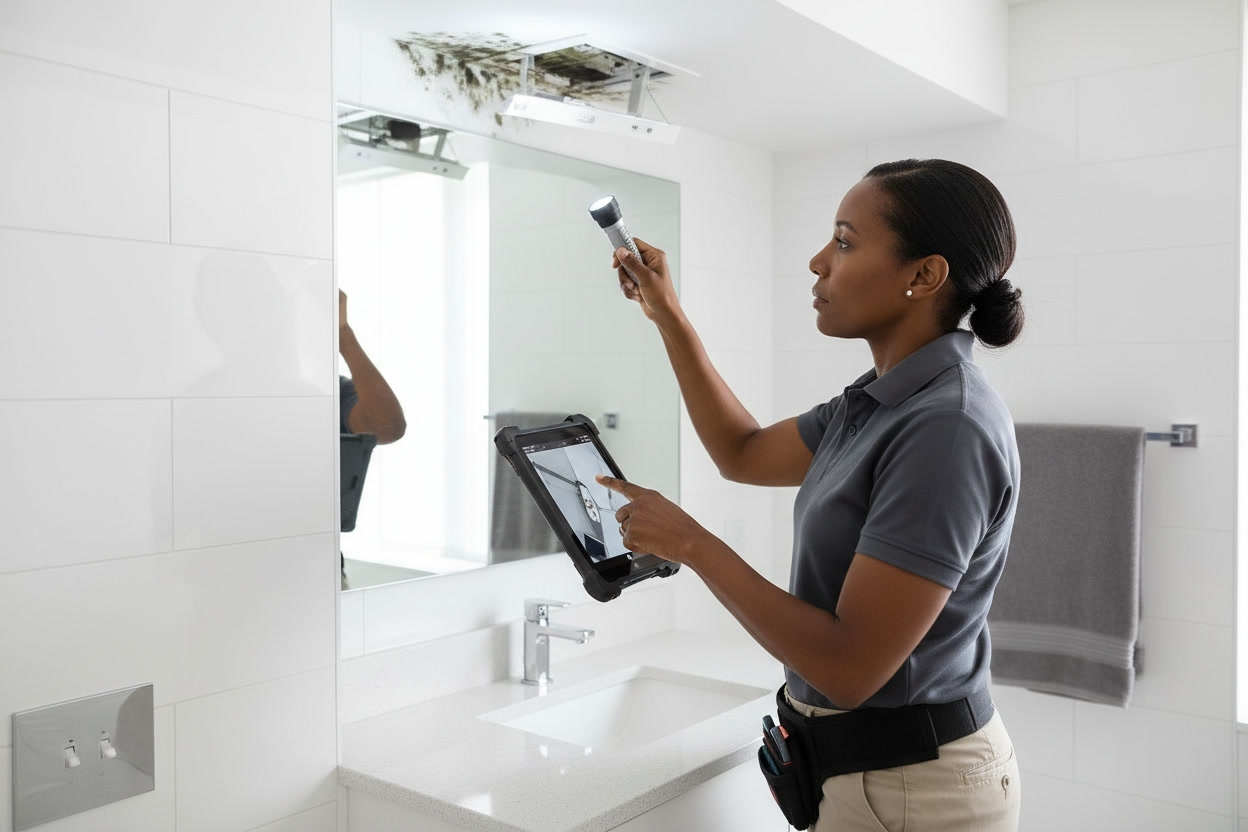
Begin by carefully examining the bathroom ventilation system. Remove the vent cover and inspect the fan, ductwork, and surrounding areas for visible signs of mold. Use a flashlight to see into dark or hard-to-reach areas. Take note of the color, texture, and extent of the mold growth.
Photographic evidence is one of the most powerful tools in documenting mold. Use a high-resolution camera or smartphone to take clear, close-up photos of the affected areas. Capture multiple angles and include a wide shot of the entire bathroom for context. Make sure the date and time are recorded on each photo.
In addition to photos, record short videos that show the mold in real-time. Narrate the video to describe what you’re seeing, including the location, size, and appearance of the mold. Videos can provide a more comprehensive view and are particularly useful for showing mold in motion, such as spores being disturbed.
Document your findings in writing. Include the date of discovery, specific locations of mold growth, any noticeable odors, and symptoms experienced by occupants. Note any recent water damage, leaks, or ventilation issues that may have contributed to the mold growth.
If available, use a moisture meter to measure the moisture content in walls, ceilings, and around the ventilation system. A hygrometer can help you monitor the humidity levels in the bathroom. High moisture readings support your claim that the environment is conducive to mold growth.
For a more thorough assessment, consider hiring a professional to collect air samples. These samples can be analyzed in a lab to determine the type and concentration of mold spores present. This data is especially useful for insurance claims and legal documentation.
Store all photos, videos, notes, and test results in a dedicated folder. Create digital backups and consider using cloud storage for easy access. Having organized documentation will streamline the claims process and ensure you have all necessary evidence readily available.
For more information on how to handle mold-related property issues, visit our mold damage page.
When it comes to filing an insurance claim for mold damage, documentation is everything. Insurance companies require clear, detailed evidence to validate your claim and determine the extent of coverage. Without proper documentation, your claim may be delayed, reduced, or even denied.
Here’s why documentation is so important:
Insurance policies vary widely in their coverage of mold damage. Some policies exclude mold altogether, while others cover it only if it results from a covered peril, such as a burst pipe or storm damage. That’s why it’s essential to work with experienced professionals like LMR Public Adjusters who understand the intricacies of insurance policies and can advocate on your behalf.
Our team has extensive experience handling property claims related to mold and other types of damage. We ensure that your documentation is thorough, accurate, and aligned with insurance requirements, maximizing your chances of a successful claim.
Documenting mold in bathroom ventilation may seem straightforward, but several challenges can complicate the process. Understanding these obstacles and knowing how to overcome them will help you create a more effective and credible documentation package.
Mold often grows in hidden areas such as inside ductwork, behind walls, or above ceilings. These areas are difficult to access and inspect without specialized tools. To overcome this, use a borescope camera or hire a professional mold inspector who can access and document hidden mold safely.
Many property owners are unfamiliar with the technical aspects of mold identification and documentation. Misidentifying mold or failing to capture critical details can weaken your claim. Educate yourself using reliable resources or consult with experts like LMR Public Adjusters to ensure your documentation meets professional standards.
Incomplete documentation can lead to claim denials. Make sure to include all necessary elements—photos, videos, notes, and test results—and keep them organized. Use a checklist to ensure nothing is overlooked.
Waiting too long to document mold can result in further damage and complicate the claims process. Mold spreads quickly, and insurance companies may question your diligence if there’s a significant delay. Document the issue as soon as it’s discovered and contact a public adjuster immediately.
Insurance companies may dispute the cause or extent of mold damage. They might argue that the mold resulted from neglect or a non-covered peril. Having detailed, time-stamped documentation and expert assessments can counter these arguments and strengthen your case.
If you’re facing challenges with your mold claim, our team at LMR Public Adjusters is here to help. We provide expert guidance and representation to ensure your claim is handled fairly and efficiently.
While DIY documentation is a good starting point, working with professionals can significantly enhance the credibility and effectiveness of your mold claim. Here’s how different experts can assist in the documentation process:
Certified mold inspectors use specialized equipment to detect and assess mold growth, including hidden areas. They provide detailed reports, lab results, and professional opinions that carry weight with insurance companies.
These professionals conduct air quality tests and analyze mold spore concentrations. Their findings can support claims related to health impacts and environmental hazards.
Public adjusters like LMR Public Adjusters are licensed professionals who represent policyholders in insurance claims. We handle all aspects of the documentation process, from initial inspection to final settlement. Our team ensures that your claim is backed by solid evidence and presented in a way that maximizes your compensation.
We also assist with claims related to water damage, pipe bursts, and other issues that often accompany mold growth. Our comprehensive approach ensures that all related damages are accounted for and included in your claim.
Documenting mold in bathroom ventilation is a critical step in protecting your health, property, and financial interests. From conducting thorough inspections and capturing high-quality evidence to organizing your documentation and working with professionals, every step plays a vital role in the success of your insurance claim.
Mold can be a silent destroyer, spreading quickly and causing extensive damage before it’s even noticed. Don’t wait until it’s too late. Take action today by documenting any signs of mold in your bathroom ventilation system and reaching out to experts who can guide you through the claims process.
At LMR Public Adjusters, we’re committed to helping South Florida property owners navigate the complexities of mold damage claims. Our dedicated team offers personalized support and expert advocacy to ensure you receive the compensation you deserve. Whether you’re dealing with mold, water damage, or other property issues, we’re here to help. Learn more about our services in your area, including Fort Lauderdale, Hollywood, and Pembroke Pines.
Don’t let mold take control of your home and health. Contact LMR Public Adjusters today and let our experienced team help you document, report, and resolve your mold issues with confidence.
Dania Beach, Broward County, Davie, Weston, Boca Raton, Cooper City, Coral Springs, Deerfield Beach, Fort Lauderdale, Hollywood, Parkland, Pembroke Pines, Pinecrest, Plantation, Pompano Beach, Sunrise, Fisher Island, Miramar, Delray Beach, Hallandale Beach , Lake Worth, Boynton